Français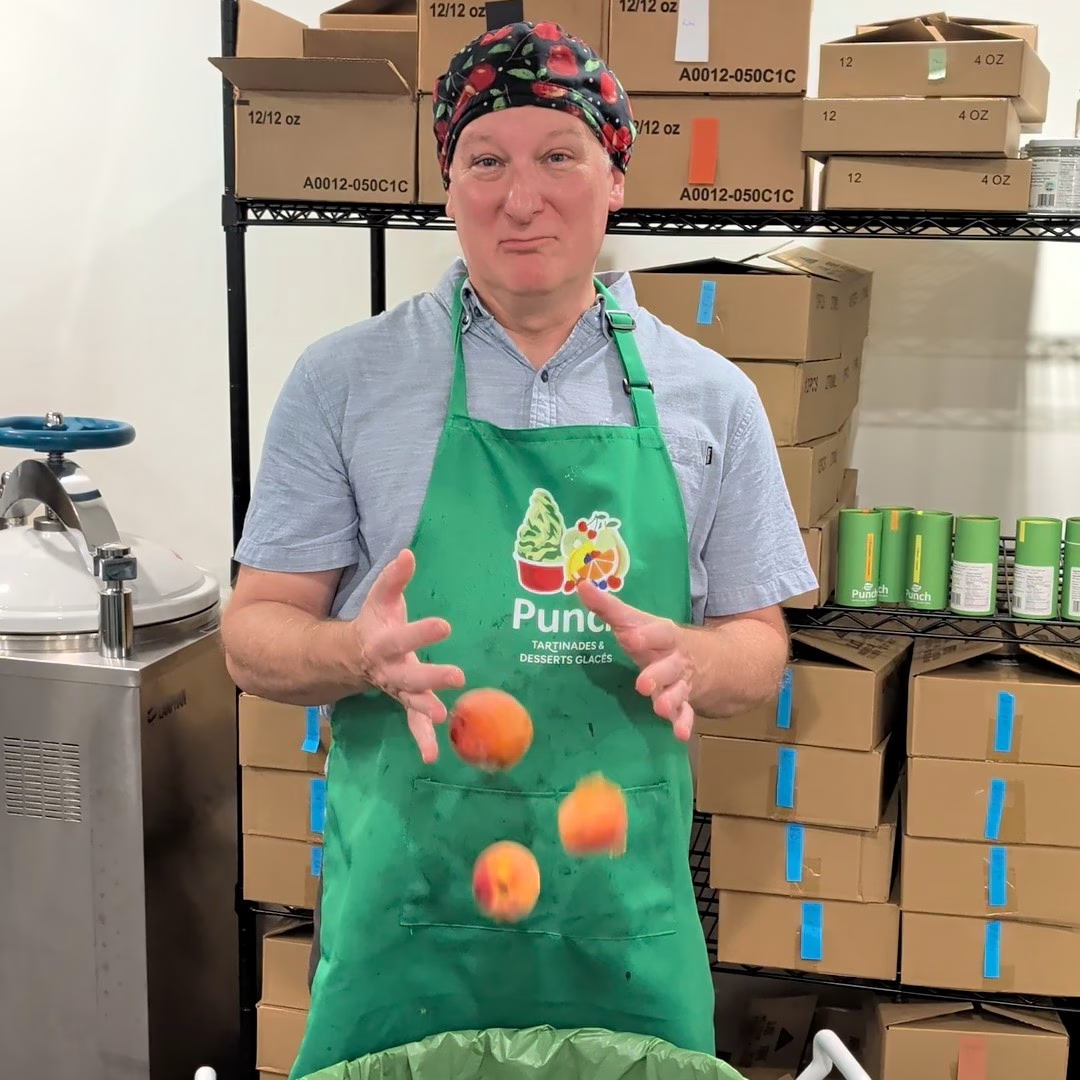
Punch allows the fruit it sources for its organic spreads to ripen naturally. This allows the complex flavors of the fruit to develop and the natural sugar content to reach a higher level. This isn’t possible in the massive, ethylene-saturated chambers used by industrial producers to control ripening down to the hour.
So over the past four years, we’ve watched hundreds of boxes of fruit ripen. And believe us, we’ve seen some green ones and some unripe ones—pun intended!
Pears that are brown on the inside and hard on the outside? Yes, we’ve seen plenty of those, too! It’s counterintuitive, but it’s probably a sign that the pear spent too much time basking in the sun on the tree. So it’s a myth that nature always gives us fruit just the way we like it.
To provide us with fruits that make our mouths water, growers have developed specialized techniques and varieties. We expect them to supply us, at affordable prices, with fruits that are ever sweeter, softer, juicier, and more flavorful. They must redouble their efforts to provide us with fruits that meet these very high expectations, while staying within our customers’ budgets.
How to produce juicy pears?
As for pears, they must be picked when firm, but not too firm. They need to spend some time in the cold, but not too cold. Bosc pears need more cold, while Bartlett pears need less. In short, the specifications are demanding.
It is a difficult job, and one that is becoming increasingly so due to the vagaries of the weather. And this is even more true when public and individual health considerations limit the tools available to these growers, as is the case with organic farming. By adhering to these requirements—and hoping that you’ll let these pears ripen under the right conditions—you’ll have a masterpiece of craftsmanship to savor.
Do you come across fruit that doesn't ripen properly? That's not so surprising, considering all the steps that need to be followed at every stage of production, distribution, and sale.
Let’s take the friendly growers, for example! Even the most careful ones can’t go through the same row 10 times just to pick only the fruit at its optimal stage of development. This is made all the more difficult by the fact that birds and small mammals—who are far less particular than we are—have their eyes on that fruit. This is the threat facing the fields, because growers often face a choice between fruit picked too early and fruit damaged by a hungry animal. In the best-case scenario, a batch will consist mostly of perfectly ripe fruit, with some picked too early and some too late.
Why is shopping at public markets better than shopping at the grocery store?
Peaches are another so-called “climacteric” fruit, meaning they must convert their starch content into sugar to become delicious. And this peach is quite finicky! It will only do so if it’s picked at just the right time—not overripe, but not too hard either. It will halt this process if subjected to the cold of a refrigerator after harvest. It prefers temperatures of 8 to 10 degrees to stay fresh before beginning its transformation into one of the juiciest and sweetest fruits.
This task is made all the more difficult by the fact that the fish will tend to suffer from brown rot (the fungus Monilinia). And to prevent bacterial growth and mold in the food we consume, food safety regulatory agencies will specify lower temperatures (0–4 degrees C) for storage.
The more peaches have been exposed to strict sanitary conditions, the more likely they are to suffer cold damage and remain mushy even when ripe. We’re biting into starch that hasn’t turned into sugar. Does this experience remind you of a basket of peaches bought at the grocery store? This isn’t surprising, considering that this method of transporting the fruit to your home is called “long-distance distribution”. This term conjures up images of a series of stops in refrigerated trucks, warehouses, and distribution centers, each one colder and more strictly sanitary than the last.
In our part of the Nordic region, it’s unlikely that you’ll find fruit that hasn’t been exposed to extreme cold. The easiest way to get fruit with the best potential for ripening is to buy it at a public market. In fact, you’ve probably already experienced this yourself.
Every climacteric fruit has its own story to tell. A colleague in the processing industry told us that if you can see a drop of sap on a mango, it means it has not been treated with hot water. According to him, this treatment limits the mangoes’ ripening potential. So far, we haven’t been able to confirm the difference between treated and untreated mangoes. There’s always something new to learn, and that’s a good thing!
How We Source the Best Fruit at Tartinades Punch
Punch Spreads tries as much as possible to prioritize short supply chains when sourcing fruit. We travel to Oka, Mirabel, Île d’Orléans, and sometimes even the Niagara Peninsula to buy our fruit. Allowing the fruit to ripen naturally requires a rigorous process of sorting and production, since we can’t predict when a piece of fruit will be ripe. There have been times when we judged fruit to be too hard in the morning, only to find that the same fruit had become perfect by late afternoon. Those that are juicy and tender to perfection are used immediately to make our spreads. When there’s too much for us to handle at the moment, we store them in the fridge until the right time comes.
The larger the volumes processed, the longer this sorting process takes. And since we handle such tiny quantities compared to those of industrial producers, I figured they couldn’t possibly do it this way. In fact, they discovered that as fruit ripens, it naturally releases ethylene. They use this property to induce ripening by placing pallets of fruit (typically 1.3 metric tons each) in a chamber saturated with ethylene. This promotes efficiency at the expense of flavor.
Here is one of the many reasons these manufacturers are able to sell their jams at lower prices. However, this is becoming less and less true, as demonstrated in the article on the recent price increase for Bonne Maman jam…