 Skip to main content
Skip to footer
Skip to main content
Skip to footer
 Français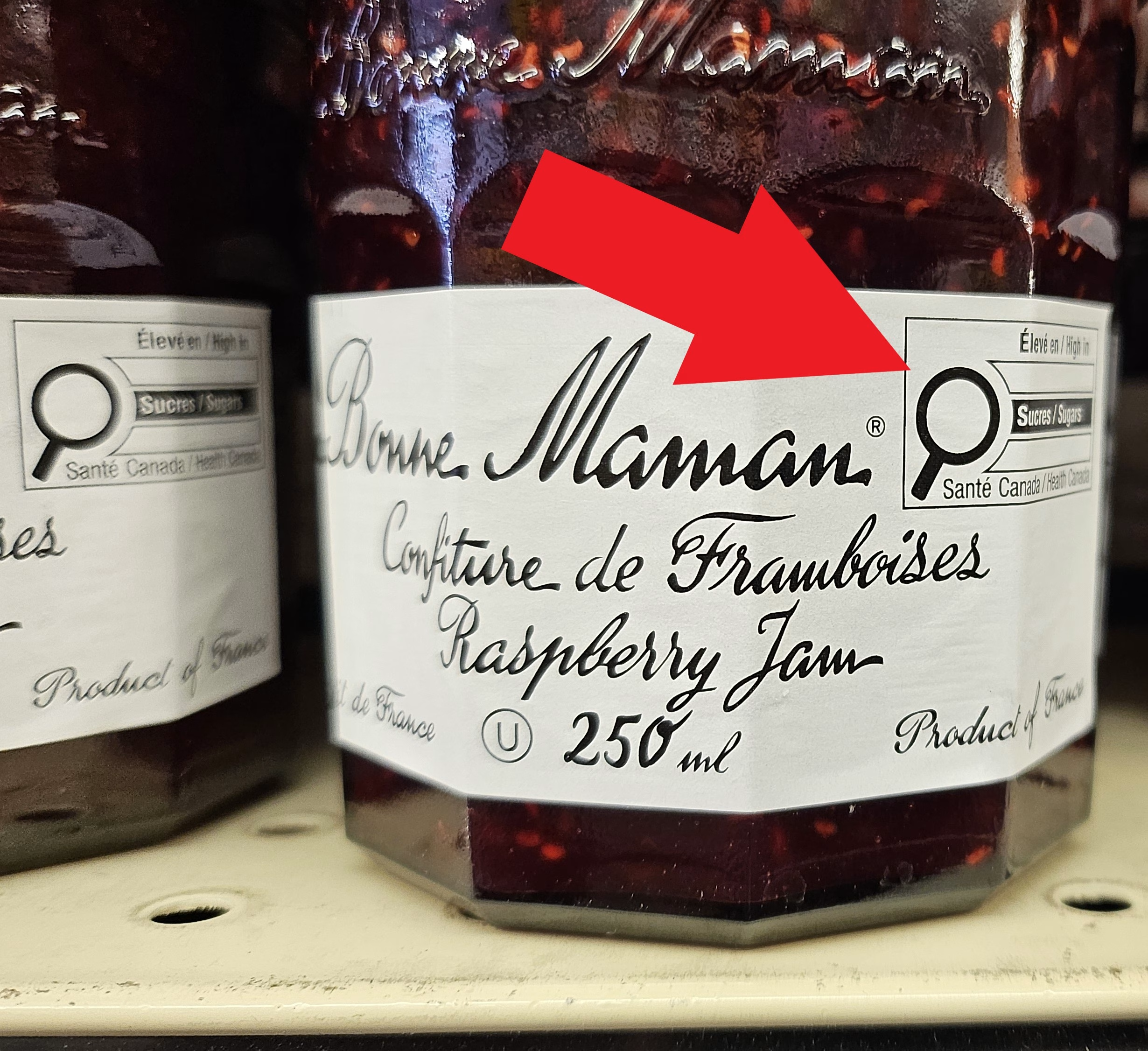
To sell a "jam" in Canada, it must contain a minimum of 66% sugar (*). It's massive! The terms “marmalade” and “jelly” are also protected, with minimum sugar content requirements of 65% and 62%, respectively. Europe has less stringent requirements, with a minimum of 60% sugar, and France even less at 55%. Pour respecter les exigences canadiennes, les confitures doivent avoir un minimum de 12-13 grammes de sucre par portion de 1 c. à soupe (15 ml).
C’est une ironie moderne, car les états réservent ces termes biens connus à des produits trop sucrés et mauvais pour la santé, et force les producteurs de meilleurs produits à utiliser les termes moins vendeurs “préparation aux fruits” ou “tartinade”. C’est exactement ce que fait Punch : des tartinades de fruit allégées en sucre, mais forte en fruit et en goût.
À l’origine, le taux de sucre élevé était nécessaire pour la conservation. En grande quantité, il capte l’eau par osmose et la rend indisponible aux micro-organismes comme les bactéries et levures qui ne peuvent se développer. Les confitures pouvaient rester saines à température ambiante, un avantage indéniable avant la généralisation de l’usage du réfrigérateur. En utilisant la recette simple et ancestrale de moitié-fruit, moitié-sucre, et en cuisant suffisamment pour faire évaporer l’eau, on obtient un produit qui se conserve très longtemps. Mais au détriment du goût!
Au 19ième siècle, la fraude industrielle a pris de l’ampleur et certains producteur peu scrupuleux fabriquaient des confitures avec de l’eau, du colorant et des navets pour l’épaissir. Ceci afin de remplacer les ingrédients plus chers comme les fruits et le sucre. C’est ainsi que le législateur a légiféré en imposant des quantités minimales de fruits et de sucre. L’objectif de légiférer sur la quantité de sucre avait moins pour but de garantir son omniprésence, que d’empêcher la présence d’autres produits moins désirables.
De nos jours, le sucre est bien meilleur marché qu’il ne l’était au 19ième siècle et il est avantageux financièrement de l’utiliser en remplacement des fruits. C’est un peu comme le faisaient les industriels peu scrupuleux.
Heureusement, avec des procédés de fabrications stériles et des pectines adaptées à des pourcentages de sucres moindres, il est maintenant possible de produire des tartinades aux propriétés supérieures à celles des confitures. C’est exactement ce que fait Tartinades Punch. De plus, nous cuisons les fruits juste assez pour détruire les organismes pathogènes tout en conservant le goût vif des fruits frais.
La plupart des tartinades Punch ont un taux de sucre se situant entre 40 et 46%, que nous avons choisi avec soin pour avoir le “goût Punch” distinctif:
- Wild Blueberry and Pomegranate : 40% or 6 grams of sugar per serving of 15 ml
- Strawberry and Passion Fruit : 43% or 7 grams of sugar per serving of 15 ml
- Raspberry and Blood Orange : 42% or 6 grams of sugar per serving of 15 ml
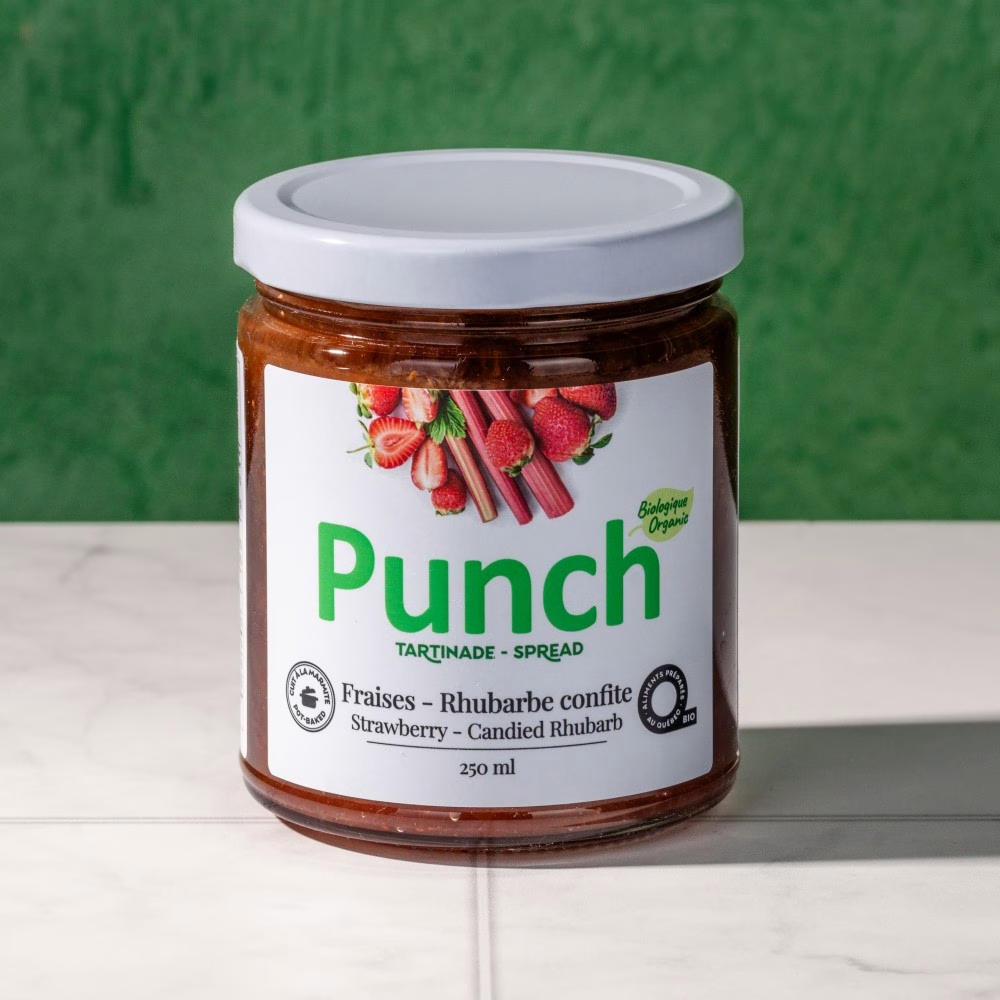
- Strawberry and Candied Rhubarb : 41% or 6 grams of sugar per serving of 15 ml
- Lime-Pear-Basil : 46% or 8 grams of sugar per serving of 15 ml
Based on our experience, we have determined that a 40% threshold gives these spreads a shelf life of a few months in the refrigerator. We recently created three spreads for those who would like to lower the sugar intake even more in their diet :
- Ground Cherry and Orange : 35% or 4 grams of sugar per serving of 15 ml
- Mango and Orange : 34% or 5 grams of sugar per serving of 15 ml
- Haskap Berry and Grape : 36% or 5 grams of sugar per serving of 15 ml
These healthier products will last a few weeks in a fridge once opened. The mango-orange spread, with a sugar content of 34% as measured by a refractometer, contains 48% less sugar than jam: (66–34)/66 = 48%
Since 2026, products such as jams with a sugar content of 10 g or more per 15-ml serving must display on their front label the Health Canada high-sugar warning label because these contain too much sugar. Here is the perfect illustration of this modern irony: the same agency enacts laws with diametrically opposed objectives.
None of the Punch Spreads products must show this warning. For this we are very proud.
(*) The requirements define soluble dry matter, which consists of the sugars naturally present in the fruit and any added sugars.