Français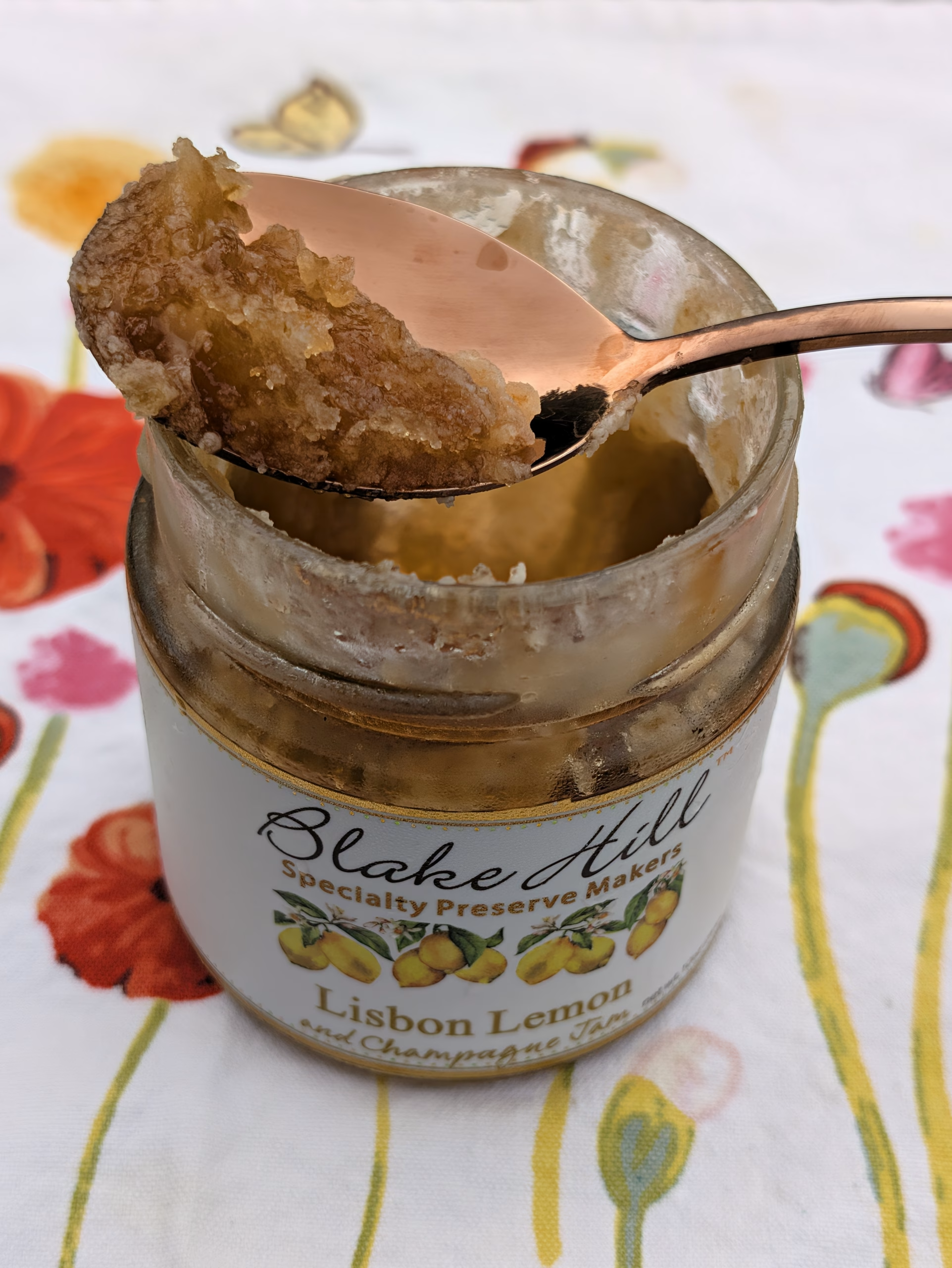
Prior to opening
Jam and spreads are made the same way. The former must contain two-thirds sugar to be called “jam”. To determine if the product is still good, consumers look for the “best before” date on the jar. Although the law does not require manufacturers to include such a date for products with a long shelf life (90 days or more), most do so. Important: this is not an expiration date. The product may still be safe to eat well past the “best before” date. In fact, groups campaigning against food waste would like to see this date eliminated to encourage consumers to use their senses to determine when it’s time to throw food away.
The Canadian Food Inspection Agency (CFIA) gives manufacturers considerable leeway in setting the “best before” date. Regulations require a rigorous process, but setting the final date is left to the manufacturer’s discretion.
It’s far from an exact science! In the case of spreads or jams, a safe manufacturing process will eliminate microorganisms in the jarred product. There will be no microbial growth over time, unless the jar’s safety seal is broken. In that case, microbial activity will release gases that cause the lid of the spread or jam to bulge. Throw away any jars with bulging lids! This rarely happens.
Since the product remains safe to eat, the only factors that can degrade its quality and thus limit the shelf life of spreads and jams are:
- The color that fades during the oxidation process,
- The texture that can become less pleasant,
- The taste that can become blander.
The manufacturer must determine the rate at which these properties will degrade. The simplest—but also the most time-consuming—method is through direct observation. By allowing the jars to age, one can open them at regular intervals and assess the product’s quality. When Tartinades Punch produced its first jars, these observations were not available. We therefore erred on the side of caution by setting the shelf life at 18 months after packaging.
Over the years, we have found that for the vast majority of our products, this date was too soon.
Raspberry combos : 18 months
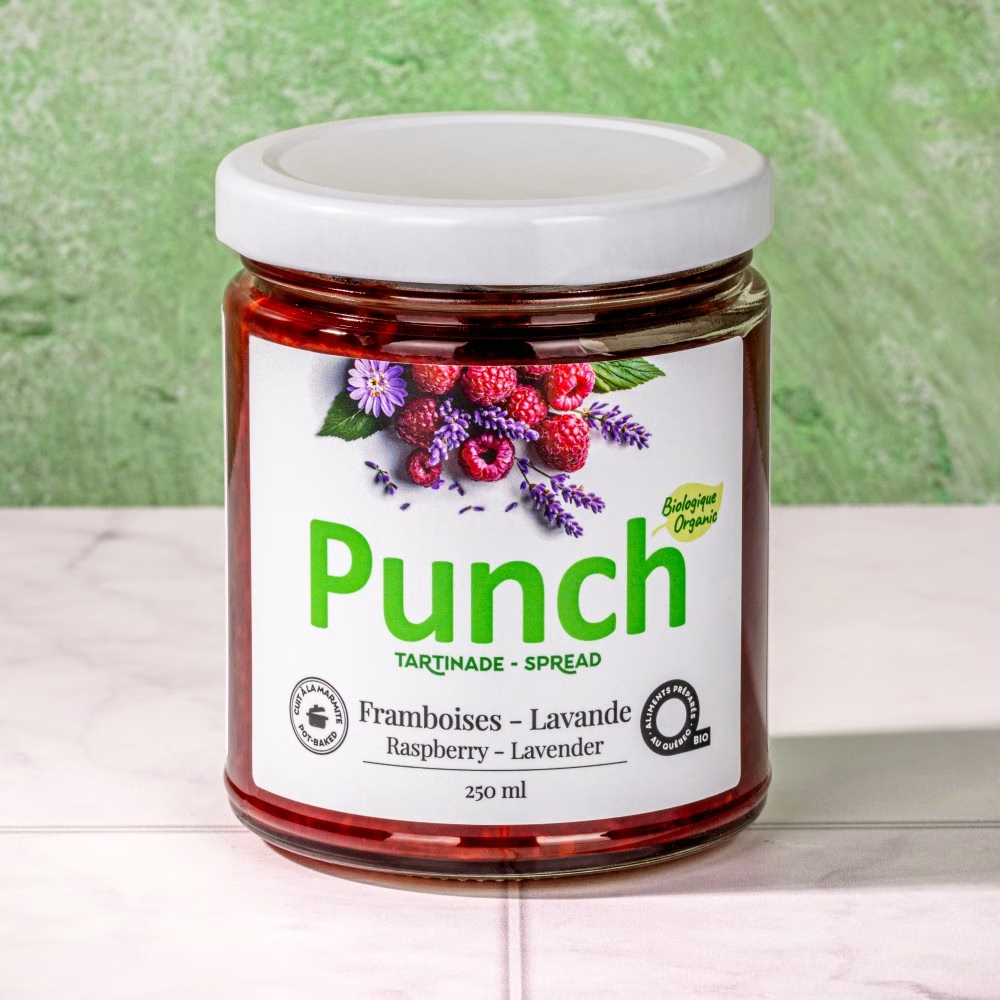
We have maintained the 18-month period for our raspberry blends, primarily because of the color change and the expansion of the seeds. The pigments that give the spreads their color are called anthocyanins. Red colors are the most prone to oxidation. This is why the color fades first toward the top of the jar, where the oxygen needed for oxidation is present.
To offer you the freshest possible raspberry spreads, we’ve adjusted our production schedule to make these blends frequently (with blood orange or lavender). As a result, our inventory is low, and we only ship products that have been made recently.
Regular products : 24 months
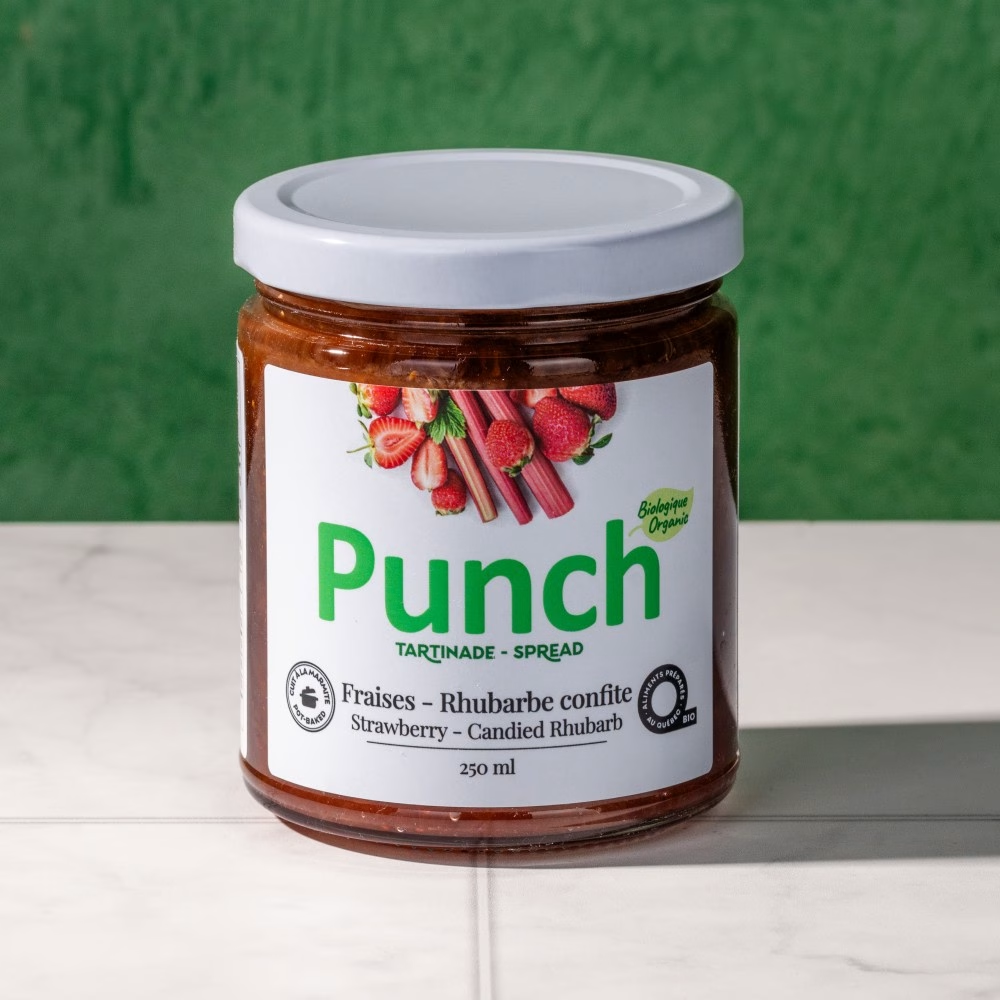
Based on direct observation, we set the best-by date for most of our products at 24 months. Most will show slight discoloration due to the presence of oxygen, which is most concentrated at the top of the jar. This is particularly true for orange or red colors, such as strawberry. Otherwise, no deterioration is noticeable.
Stable colors : 48 months
Dark colors, such as wild blueberry-pomegranate or haskap berry-grape, are extremely colorfast. Even after three years, the products still look as if they were just made.
One the jar is open
This is one of the questions we’re asked most often. It’s understandable, because you want to choose the right size based on your needs. A size that’s too large will result in waste if it can’t be stored long enough.
One crucial thing to keep in mind: the microorganisms that can make the product unsafe once it’s opened do not come from the product itself. You’re the one who will introduce them! Don’t feel bad about it: it’s impossible not to introduce them.
Although it is impossible to prevent all contamination, there are two simple steps you can take to minimize it:
-
Use a clean utensil: Avoid getting bread crumbs, butter, or other food residue into the jar.
-
Minimize the time spent at room temperature: The cold temperature of the refrigerator slows microbial activity. Return the jar to the refrigerator as soon as serving is complete.
When these precautions are taken, the shelf life depends on the amount of water available to microorganisms. Professionals refer to this parameter as Aw, or Activity of water. We have established three main categories based on this criterion:
- Jams: They contain so much sugar (two-thirds) that there is no water left for microorganisms to grow. In fact, this product could be stored at room temperature. One might think that it has a very long shelf life. However, the sugar crystallizes after a few months. This deterioration makes the product much less appealing to the palate.
- Spreads with 40% sugar or more: Most Punch spreads fall within this range, but primarily between 40 and 46% sugar—the Brix degree. We have found through experience that this range is optimal for taste, texture, and shelf life. These spreads should keep for several months in the refrigerator, provided standard precautions are followed.
- Les tartinades avec moins de 40% de sucre : Tartinades Punch a récemment mis en marché un trio de tartinades avec des quantités encore plus réduites en sucre par portion, avec un Brix autour de 35 :
- 4 grammes pour cerises de terre orange;
- 5 grammes pour mangue-orange et camerises-raisin.
We did this to meet consumer demand for products with as little sugar as possible. However, the free water content is higher, which contributes to the proliferation of microorganisms. We have observed a shelf life of 4 to 6 weeks for these products.
We were alerted by a social media post about a product other than Punch that contained 3 grams of sugar per serving and lasted only 1 to 2 weeks before mold began to appear. This illustrates that the precautions outlined at the beginning of this section are all the more important with these products.